
Seeing blood in your dog’s urine can be worrying, especially when it continues for several days or keeps coming back.
A dog urine infection is one possible cause, but blood in the urine can also occur with bladder stones, inflammation and other urinary tract conditions.
This was the case for a 13-year-old female sterilised dog who was brought to My Family Vet after experiencing blood in her urine for several weeks.
Further investigation revealed a bladder stone that eventually required surgery.
However, removing the stone was only one part of her treatment. The stone was later sent for laboratory analysis, which identified it as struvite. This provided important information for her long-term management and prevention plan.
Study Case: A Senior Dog With Persistent Blood in Her Urine
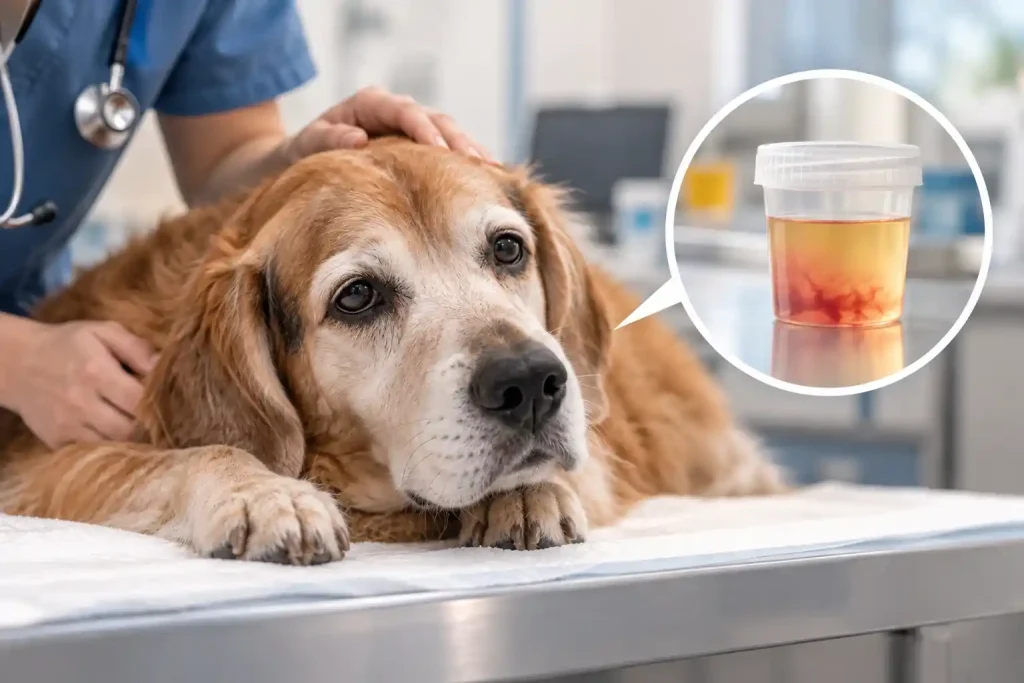
For several weeks, the owners of a 13-year-old female sterilised dog had been noticing something that was difficult to ignore: blood in her urine.
A urinary infection might be one possible explanation, but persistent blood in the urine can have other causes. Bladder stones, for example, can irritate the bladder and produce similar signs.
When the dog was brought to My Family Vet, the veterinary team began investigating what was behind the persistent blood in her urine.
What followed was a journey from physical examination and X-ray, to surgery, recovery and eventually urolith analysis that revealed an important clue about how the stone had formed.
1. Abdominal X-Ray to Identify the Bladder Stone
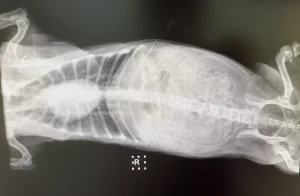
During the physical examination, the veterinary team was able to palpate a firm structure within the dog’s bladder.
This raised suspicion of a bladder stone, also known as a bladder urolith. An abdominal X-ray was subsequently performed to investigate the finding further.
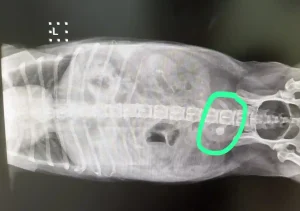
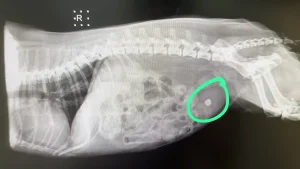
The radiograph confirmed the presence of a bladder urolith. For the owners, this provided an explanation for the blood in their dog’s urine, but it also brought a new concern: how should the stone be treated?
2. Discussing Treatment Options
At 13 years old, this was a senior dog, and her owners were understandably worried about putting her through anaesthesia and surgery.
They were concerned about the anaesthetic risks, possible surgical complications and how well she would recover. Naturally, they hoped there might be a way to manage the stone without an operation.
Could the stone be managed without surgery? The answer depended largely on the type of stone.
Some urinary stones can potentially be dissolved through an appropriate therapeutic diet and medical management.
Certain struvite stones in dogs, for example, may be candidates for medical dissolution under the right circumstances, particularly when an associated urinary infection is appropriately managed.
However, dissolution is not suitable for every patient or every stone. The stone’s type, size and location, as well as the dog’s overall health and clinical condition, all need to be considered when deciding on the most appropriate treatment.
After ongoing monitoring and further discussion with her owners, the decision was eventually made to proceed with surgery.
3. Surgical Removal of the Bladder Stone
After ongoing monitoring and further discussion with her owners, the decision was made to proceed with surgery.
The dog underwent surgery to remove the bladder stone, and the stone was successfully removed from her bladder.
For her owners, this was an important step after having carefully considered the potential risks of anaesthesia and surgery given her age.
However, removing the stone was only the beginning of the next stage of her treatment.
4. Post-Surgery Care and Recovery
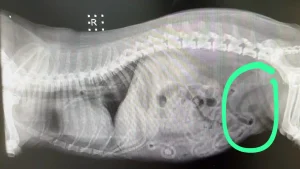
Following surgery, the dog remained in hospital for close post-operative observation and supportive care.
As a senior patient, her comfort and recovery were carefully monitored. The veterinary team kept a close watch on her appetite, hydration, urination and general condition while providing appropriate pain relief and supportive treatment.
Thankfully, she responded well after surgery. She gradually regained her appetite and normal demeanour and recovered comfortably under the team’s care.
Once she was considered well enough to go home, she was able to return to her family and continue her recovery at home.
But the treatment journey did not end with surgery. There was still one important question to answer:
What type of stone had caused the problem in the first place?
5. Urolith Analysis to Identify the Stone Type
The stone was therefore submitted to a laboratory for urolith analysis. The result identified the stone as struvite.
This was an important finding because knowing the composition of a urinary stone can help guide long-term management.
Different types of stones can have different contributing factors, and understanding the composition can help veterinarians and owners make more informed decisions about prevention.
In this case, the result allowed the veterinary team to have a more targeted conversation with the owners about what struvite means, why these stones can develop and how to reduce the risk of another stone forming.
What Are Struvite Stones in Dogs?
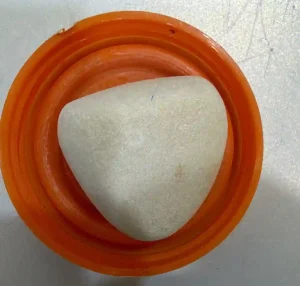
Struvite is a mineral compound made primarily of magnesium, ammonium and phosphate.
In dogs, struvite bladder stones commonly form in association with urinary tract infections caused by certain bacteria, particularly urease-producing bacteria.
These bacteria can change the urine environment in a way that encourages struvite crystal and stone formation.
However, the presence of a struvite stone does not by itself prove that a particular dog currently has a urinary infection.
Struvite stones can occasionally occur without infection, which is why the patient’s urine and overall clinical picture still need to be evaluated.
For this reason, urine testing can be an important part of investigating and managing a dog with urinary stones.
6. Urine Analysis & Monitoring
Her owners have continued to bring her back for regular rechecks and repeat urinalysis.
A dog urine analysis can provide information about urine concentration, pH, blood, crystals and other abnormalities.
Depending on the patient’s history and clinical findings, a veterinarian may also recommend a urine culture or repeat imaging such as an X-ray or ultrasound.
For a dog with a previous history of urinary stones, these follow-up checks can help the veterinary team monitor urinary health and look for changes that may suggest recurrence.
In this case, regular monitoring has become an ongoing part of her care rather than something that ended when she went home after surgery.
7. Long-Term Management and Prevention
After the stone analysis, an appropriate urinary diet was initiated as part of this dog’s long-term management.
Her owners were also advised about the importance of maintaining good hydration and continuing regular monitoring.
This is an important part of caring for dogs with a history of urinary stones. Removing the existing stone does not necessarily remove the factors that contributed to its formation.
For this patient, knowing that the stone was struvite helped the veterinary team develop a more targeted approach to her ongoing urinary health.
Is Blood in Dog Urine Always a Urinary Infection?
No. A dog urinary infection is one possible cause of blood in the urine, but it is not the only one.
Other possible causes include:
- Bladder stones
- Urinary crystals
- Bladder inflammation
- Trauma
- Kidney or other urinary tract conditions
- Other underlying diseases
This is why persistent or recurring blood in the dog urine should not simply be assumed to be an infection.
A veterinary examination can help determine whether your dog needs a urine analysis, imaging or other diagnostic tests.
When Should You Take Blood in Your Dog’s Urine Seriously?
Any unexplained blood in the urine is worth discussing with a veterinarian, particularly when it persists or repeatedly returns.
Pay attention to other urinary changes such as:
- Frequent urination
- Straining to urinate
- Passing only small amounts of urine
- Pain or discomfort when urinating
- Urinating in unusual places
- Repeated urinary problems
- Changes in appetite or energy alongside urinary signs
If your dog is unable to urinate, appears to be in significant pain or becomes severely unwell, veterinary attention should be sought urgently.
What This Case Teaches Us About Dog Urinary Health
This case was about more than simply finding and removing a bladder stone.
The initial problem was blood in the urine. Physical examination then raised suspicion of a bladder abnormality, and an X-ray confirmed the presence of a stone.
The next challenge was deciding how best to treat the stone in a 13-year-old patient. After considering the options and discussing them with her owners, surgery was performed successfully.
But the investigation did not stop there.
The stone was sent for laboratory analysis and identified as struvite. This provided important information that helped guide her long-term management, including an appropriate urinary diet, hydration and regular urine monitoring.
The overall process was:
Blood in the urine → physical examination → X-ray → bladder stone identified → surgical removal → recovery → urolith analysis → targeted management → regular urine checks
Each step provided information that helped guide the next one.
How to Prevent Urinary Stones in Dogs
Prevention depends on the type of stone and the underlying factors affecting the individual dog. For a dog with a history of struvite stones, several aspects of long-term management may be considered.
1. Maintaining Good Hydration
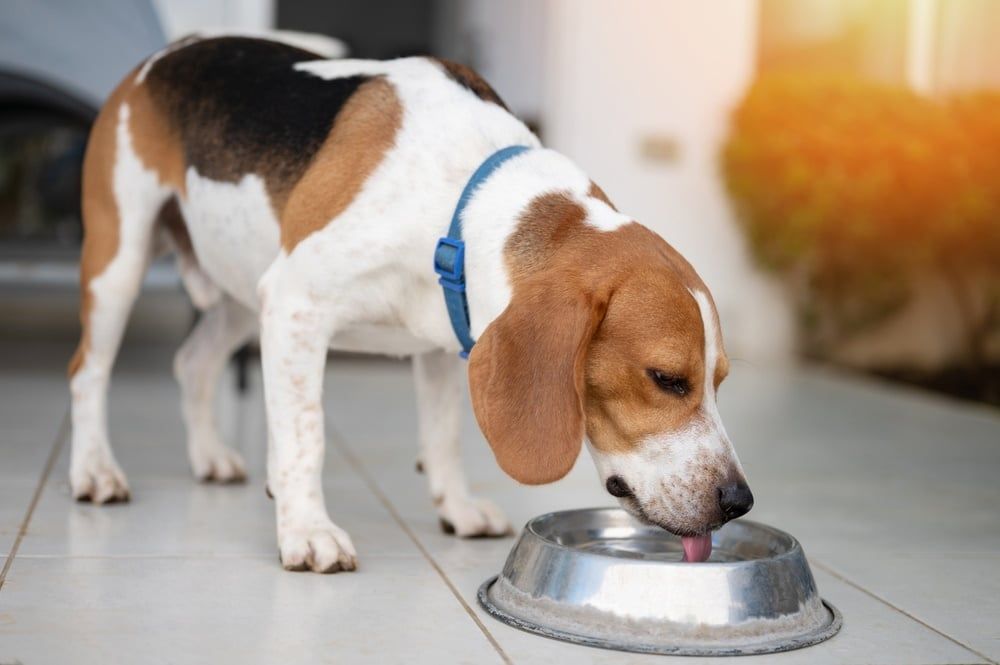
Adequate water intake helps produce more dilute urine, which can reduce the concentration of substances involved in crystal and stone formation. Encouraging water intake can therefore be an important part of urinary management.
2. Following the Recommended Diet
A therapeutic urinary diet may be recommended depending on the type of stone and the patient’s individual needs.
For this particular dog, an appropriate urinary diet was introduced after the stone analysis. However, dietary management should be tailored to the patient rather than assuming that the same diet is appropriate for every dog with urinary stones.
3. Investigating Urinary Infection
Because most canine struvite stones are associated with urinary tract infections caused by urease-producing bacteria, investigating for infection can be an important part of managing these cases.
A urine culture may be recommended when infection is suspected. This can provide additional information about whether bacteria are present and help guide appropriate treatment.
When Dog Urine with Blood Needs Further Investigation
Blood in your dog’s urine can have several possible causes. While a dog urine infection is one possibility, persistent blood can also be associated with bladder stones and other urinary tract conditions.
This case demonstrates why looking for the underlying cause matters. Through physical examination, X-rays, surgery, stone analysis and follow-up urine checks, the veterinary team was able to move beyond treating the immediate problem and develop a more targeted long-term management plan.
If you notice dog urine with blood, particularly if it persists or keeps returning, a veterinary assessment can help determine whether your dog needs urine analysis, imaging or other investigations.
Veterinary Care at My Family Vet
At My Family Vet, urinary problems are assessed based on each pet’s symptoms, medical history and clinical findings.
Depending on the situation, the veterinary team may recommend urine testing, diagnostic imaging or further investigation to understand the cause of urinary problems.
If your dog has blood in the urine, difficulty urinating or recurring urinary symptoms, speak with the veterinary team for an appropriate assessment.
Every urinary stone case is different. Treatment and prevention should be tailored to the individual patient and, where possible, guided by confirmed stone composition and appropriate urinary investigations.
