
Cat sterilization is an important part of responsible pet ownership. Whether you have a male or female cat, sterilization can help prevent unwanted pregnancies, reduce certain reproductive health risks and support better long-term health.
However, many cat owners have questions before deciding on the procedure. Is sterilization necessary for every cat?
What is the difference between cat spaying and neutering? How old should a cat be before undergoing surgery?
And perhaps one of the most common questions, how much does cat sterilization cost in Singapore?
In this guide, we explain everything you need to know about sterilization for cats, including its benefits, procedure, recovery and pricing at My Family Vet.
What Is Cat Sterilization?
Cat sterilization is a surgical procedure performed to prevent cats from reproducing. It involves removing or disabling the reproductive organs responsible for producing offspring.
The procedure is commonly divided into two types:
- Cat spaying: A surgical procedure performed on female cats to remove their reproductive organs, typically the ovaries and uterus.
- Cat neutering: A procedure performed on male cats to remove their testicles, preventing them from fathering kittens.
Both procedures are commonly performed under general anaesthesia, meaning the cat is asleep and does not feel pain during surgery.
Although the surgical techniques differ, the purpose is similar: to prevent unwanted reproduction and provide certain health and behavioural benefits.
Also Read: Senior Pets and the Meaning of Care: A Veterinarian’s Perspective
Cat Spaying vs Cat Neutering: What Is the Difference?
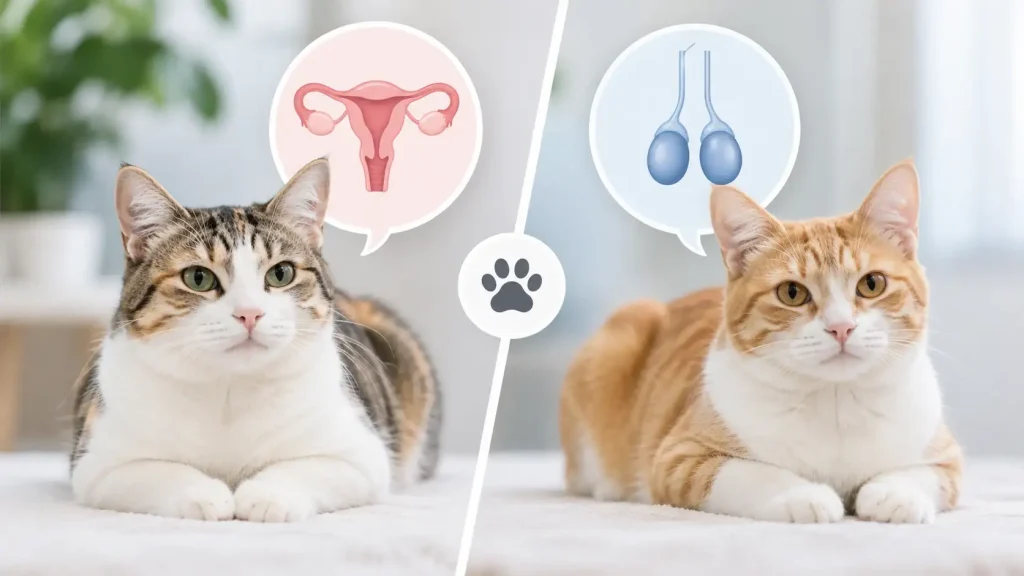
The terms spaying and neutering are sometimes used interchangeably, but they refer to different procedures depending on the cat’s sex.
| Comparison | Female Cat (Spaying) | Male Cat (Neutering) |
| Procedure | Removal of the ovaries, usually with the uterus | Removal of both testicles |
| Surgical location | Abdomen | Scrotal area |
| Prevents pregnancy | Yes | Prevents the cat from fathering kittens |
| Heat cycles | Stops normal heat cycles | Does not experience heat cycles |
| Recovery | May require more recovery time due to abdominal surgery | Generally involves a smaller surgical wound |
Female cat sterilization generally involves an abdominal incision, making it a more involved procedure than routine male cat neutering.
Both procedures require appropriate anaesthesia, pain management and post-operative care.
Benefits of Sterilization for Cats
Cat sterilization offers several benefits beyond preventing unwanted litters. It can also reduce certain reproductive health risks and influence hormone-related behaviours.
1. Prevents Unwanted Pregnancies
One of the main reasons for sterilization for cats is to prevent unplanned pregnancies.
Female cats can become pregnant from a relatively young age and may have multiple litters throughout their reproductive lives.
Without sterilization, this can contribute to an increasing number of unwanted kittens.
Neutering male cats also helps prevent them from fathering unplanned litters.
Sterilization is therefore an important way to manage the cat population and reduce the number of unwanted or abandoned kittens.
2. Reduces the Risk of Reproductive Health Problems
Spaying female cats eliminates the risk of pregnancy-related complications and significantly reduces the risk of certain reproductive conditions.
For example, removing the ovaries and uterus prevents pyometra, a potentially serious infection of the uterus.
Spaying before the first heat cycle can also significantly reduce the risk of mammary tumours in female cats.
For male cats, neutering eliminates the risk of testicular cancer and may reduce certain prostate-related problems.
3. Reduces Heat-Related Behaviours
Female cats that have not been spayed can experience repeated heat cycles.
During this period, they may become more vocal, restless, affectionate or eager to escape outdoors in search of a mate.
Spaying prevents normal heat cycles and the associated behaviours.
Male cats may also display hormone-related behaviours, such as roaming, urine spraying and fighting with other cats.
Neutering can help reduce these behaviours, particularly when performed before they become established habits.
However, sterilization does not guarantee that every behavioural issue will disappear. Some behaviours may continue due to stress, environmental factors or learned habits.
4. Helps Reduce Roaming and Fighting
Unneutered male cats may be more likely to roam in search of female cats, increasing their exposure to traffic accidents, territorial fights and infectious diseases transmitted through bites.
Neutering can reduce the urge to roam and certain hormone-driven aggressive behaviours.
However, neutered cats may still explore outdoors or display territorial behaviours depending on their personality and environment.
5. Supports Responsible Pet Ownership
Sterilization is also an important part of responsible cat ownership.
By preventing unplanned pregnancies, cat owners can help reduce the number of unwanted kittens and the pressure on animal shelters and rescue organisations.
For households with multiple cats, sterilization can also help prevent accidental breeding and make it easier to manage their pets.
When Should You Sterilise a Cat?
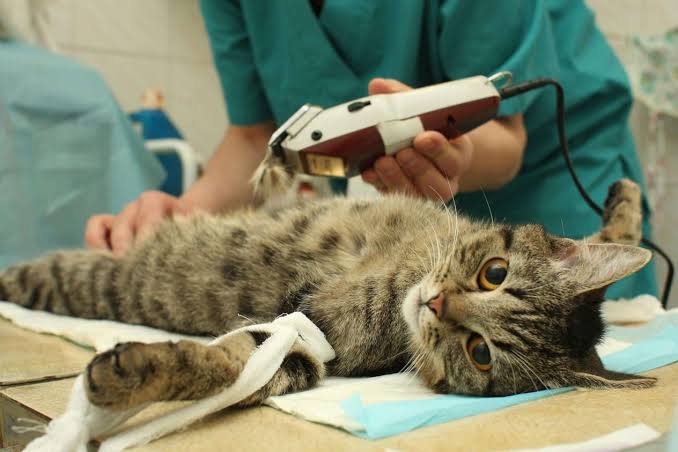
Many veterinarians recommend sterilizing cats before they reach sexual maturity, often around four to six months of age.
However, the appropriate timing can depend on the cat’s breed, size, health condition and individual development.
Female cats can become pregnant during their first heat cycle, so discussing sterilization with your veterinarian before this stage is important.
Male cats may also begin displaying mating-related behaviours as they approach sexual maturity.
If you are unsure when to arrange the procedure, a veterinary consultation can help determine the most appropriate timing for your cat.
How Is Cat Sterilization Performed?
Cat sterilization is performed under general anaesthesia. Although the exact surgical technique differs between male and female cats, both procedures require careful preparation and monitoring.
Here is what cat owners can generally expect.
1. Pre-Surgical Health Assessment
Before surgery, the veterinarian performs a physical examination to assess the cat’s overall health and suitability for general anaesthesia. This includes checking the heart, lungs, body condition and other important health indicators.
Pre-anaesthetic blood work is also strongly recommended before surgery, regardless of the cat’s age or apparent health.
Some underlying conditions, such as kidney or liver problems, anaemia and other abnormalities, may not show obvious symptoms or be detected through a physical examination alone.
Blood tests help provide a clearer picture of your cat’s internal health and identify potential concerns that could increase anaesthetic risks.
Detecting these conditions beforehand allows the veterinary team to assess the risks, make appropriate adjustments to the anaesthetic plan and determine whether further investigation or treatment is needed before proceeding.
At My Family Vet, a pre-anaesthetic physical checkup and microscopic fur examination are included in the listed sterilization cost.
Pre-anaesthetic blood work is available as an additional screening service and is strongly recommended to support safer surgical planning.
2. General Anaesthesia
Once the cat is considered suitable for surgery, general anaesthesia is administered.
The cat remains unconscious during the procedure, while the veterinary team monitors its condition.
Pain relief is also provided to help keep the cat comfortable during and after surgery.
3. Surgical Procedure
For female cats, the veterinarian makes an incision in the abdomen to access and remove the reproductive organs.
For male cats, the veterinarian makes small incisions in the scrotal area to remove both testicles.
The surgical approach and closure technique depend on the individual patient and the veterinarian’s assessment.
4. Post-Surgical Monitoring
After surgery, the cat is monitored while recovering from anaesthesia.
The veterinary team checks its recovery, comfort and general condition before determining when it is ready to return home.
Owners will also receive instructions on medication, wound care and follow-up monitoring.
How Much Does Cat Sterilization Cost in Singapore?
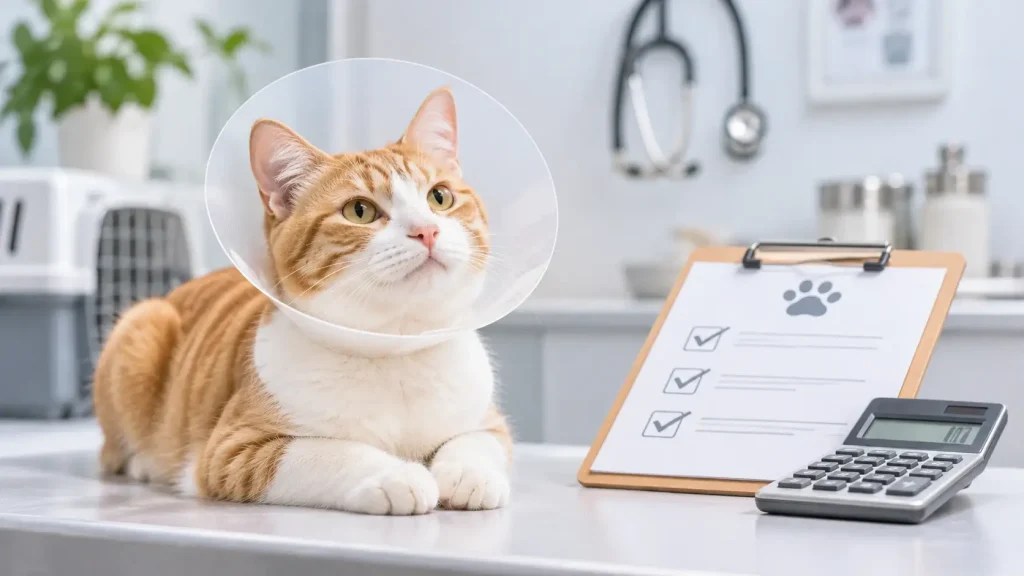
The cat sterilization cost in Singapore varies depending on whether your cat is male or female, the surgical procedure required and any additional tests or medications needed.
Female cat sterilization generally costs more than male cat neutering because spaying involves abdominal surgery and additional surgical materials.
At My Family Vet, the estimated sterilization cost starts from S170 for male cats and S238 for female cats, excluding GST.
Here is a breakdown of the estimated costs.
Cat Sterilization Price at My Family Vet
All prices below are in Singapore dollars (SGD) and exclude GST.
| Cost Breakdown | Male Cat | Female Cat |
| Sterilisation & anaesthesia | S$60 | S$90 |
| Sterile surgical pack & suture set | – | S$38 |
| Synulox antibiotic injection | S$25 | S$25 |
| Tramadol pain relief injection | S$25 | S$25 |
| Take-home medications | S$20 and above | S$20 and above |
| Pre-anaesthetic checkup | S$25 | S$25 |
| Microscopic check of fur | S$15 | S$15 |
| Estimated total | S$170 and above | S$238 and above |
The estimated total is based on the listed components and may vary depending on the cat’s individual needs and the complexity of the procedure.
For female cats, the number of sterile surgical packs and suture sets used may also vary depending on surgical complexity.
Additional Costs to Consider
Apart from the estimated sterilization price, some cats may require additional examinations, tests or post-surgical supplies.
These are not included in the estimated totals above and may be recommended based on the cat’s health condition.
| Additional Item | Price |
| Elizabethan collar (E-collar) | S13–S18 |
| Complete Blood Count (CBC) | S$65 |
| General Health Profile (GHP) | S$120 |
| Comprehensive Health Profile (CHP) | S$180 |
| FIV/FeLV/Heartworm test (cats) | S$68 |
| Coagulation panel (PT/APTT) | S$145 |
| Radiographs (2 views) | S$180 |
Why Might a Cat Need Additional Blood Tests Before Sterilization?
Pre-anaesthetic blood tests are strongly recommended for every cat before sterilization, regardless of age or apparent health.
Some underlying conditions, such as kidney or liver problems and anaemia, may not show obvious symptoms.
Blood tests help identify potential health risks before general anaesthesia, allowing the veterinary team to make informed decisions and plan a safer procedure.
At My Family Vet, the following blood tests are available:
Complete Blood Count (CBC) – S$65
This test checks red blood cells, white blood cells and platelets. It can help identify anaemia, infection, inflammation and platelet-related abnormalities before anaesthesia.
General Health Profile (GHP) – S$120
This profile checks important organ and metabolic indicators, including liver and kidney values, blood sugar, protein levels and electrolytes.
Comprehensive Health Profile (CHP) – S$180
This provides a more detailed assessment of organ function, metabolic health, electrolytes, proteins and other health indicators. It may be useful for senior cats or pets with existing health concerns.
The clinic’s pricing information recommends pre-anaesthetic blood work, with the following guidance:
- Cats younger than 7 years: CBC + GHP.
- Cats older than 7 years: CBC + CHP.
The veterinarian will assess which tests are appropriate based on the cat’s health and medical history.
Other investigations may also be recommended when clinically necessary. For example, an FIV/FeLV/Heartworm test may be used to check for relevant infectious diseases, while a coagulation panel assesses how well the blood clots.
Radiographs may be recommended when there are specific clinical concerns that require further investigation.
Important: Not every cat will require every additional test. The final cost depends on the veterinarian’s recommendations and the individual cat’s condition.
Why Is Female Cat Sterilization More Expensive?
Female cat sterilization generally costs more than male cat neutering because the surgical procedure is more involved.
During female cat spaying, the veterinarian needs to access the reproductive organs through an abdominal incision. This requires additional surgical materials, including a sterile surgical pack and suture set.
Male cat neutering is generally a simpler procedure involving the removal of the testicles through small incisions.
This difference in surgical complexity is reflected in the estimated prices at My Family Vet.
Is Cat Sterilization Worth the Cost?
Although sterilization involves an upfront expense, it can help prevent unwanted pregnancies and reduce the risk of certain reproductive health conditions.
For female cats, it eliminates the possibility of pyometra after the reproductive organs are removed. It can also significantly reduce mammary tumour risk when performed at an appropriate early age.
For male cats, neutering eliminates testicular cancer risk and may reduce certain hormone-related behaviours.
Ultimately, the decision should consider your cat’s health, lifestyle and long-term needs. Discussing the procedure and estimated costs with a veterinarian can help you make an informed decision.
Frequently Asked Questions About Cat Sterilization
1. Is cat sterilization necessary?
Sterilization is commonly recommended for cats that are not intended for breeding. It helps prevent unwanted pregnancies and offers certain reproductive health benefits. However, the decision and timing should be discussed with a veterinarian based on the cat’s individual condition.
2. What is the difference between cat spaying and neutering?
Cat spaying refers to the surgical sterilization of female cats, typically involving the removal of the ovaries and uterus. Cat neutering refers to the removal of both testicles in male cats.
3. How much does cat sterilization cost in Singapore?
At My Family Vet, the estimated cat sterilization price starts from S170andaboveformalecatsandS238 and above for female cats, excluding GST. Additional charges may apply for blood tests, other investigations, medication or post-surgical supplies.
4. At what age should a cat be sterilized?
Many cats are sterilized at around four to six months of age, although the appropriate timing depends on their health and development. Consult your veterinarian to determine the most suitable time.
5. Is cat sterilization painful?
The procedure is performed under general anaesthesia, so cats do not feel pain during surgery. Pain relief is also provided to help manage discomfort after the procedure.
Some soreness or reduced activity may occur during recovery, but your veterinarian can provide appropriate medication and care instructions.
6. Can an older cat undergo sterilization?
Yes. Older cats can undergo sterilization if they are considered suitable for anaesthesia and surgery. Additional health assessments or blood tests may be recommended to evaluate potential risks.
7. Can a female cat still get pregnant after spaying?
A properly spayed female cat should not become pregnant because the reproductive organs responsible for pregnancy have been removed. If a cat shows signs of heat after surgery, a veterinary examination is recommended to investigate the cause.
8. Does my cat need blood tests before sterilization?
Even if your cat appears healthy, underlying issues may not be obvious during a routine check-up. Pre-anaesthetic blood screening helps assess organ function and detect potential concerns before surgery, so the vet can better evaluate your cat’s readiness for anaesthesia.
Cat Sterilization at My Family Vet
Deciding to sterilize your cat is an important part of responsible pet ownership. Understanding the procedure, potential benefits, recovery requirements and costs can help you make a more informed decision.
At My Family Vet, our veterinary team can assess your cat’s health, discuss suitable sterilization options and recommend any necessary pre-surgical examinations.
Whether you are considering female cat sterilization or male cat neutering, we are here to help you understand the procedure and provide appropriate care for your pet.
My Family Vet
265 Bukit Batok East Ave 4, #01-403, Singapore 650265
Phone: +65 8102 6966