Pyometra in Dogs: Symptoms, Treatment and a Case Study
August 29, 2026
If your dog is an unspayed female, pyometra is a serious and potentially life-threatening uterine infection that can develop as she gets older.
It often starts quietly, with no obvious early warning signs, but can progress quickly and lead to severe illness, sepsis, uterine rupture, or even death if treatment is delayed.
Understanding how pyometra develops, what symptoms to look out for, and when to seek veterinary care can make a life-saving difference.
The following case from My Family Vet shows why early recognition and prompt treatment are so important.
What Is Pyometra in Dogs?
Pyometra is a bacterial infection of the uterus that causes pus and infected fluid to accumulate inside the womb.
It most commonly affects unspayed female dogs, especially middle-aged to older dogs, although it can occur in younger dogs as well.
As the infection progresses, the uterus can become severely enlarged and filled with infected material. In advanced cases, bacteria and toxins can spread into the bloodstream, affecting the whole body.
Pyometra is considered a veterinary emergency because without treatment, the infected uterus can rupture or lead to life-threatening sepsis.
How Pyometra Starts: What Happens Inside the Body?
Pyometra usually develops after a female dog goes through her heat cycle.
After heat, hormonal changes (especially progesterone) cause the lining of the uterus to thicken in preparation for pregnancy.
If the dog does not become pregnant over repeated cycles, this thickened lining can become abnormal over time. This creates a situation where:
The uterus lining becomes thicker and more “gland-like”
Natural uterine defenses become weaker
Bacteria (often from the vagina) can enter the uterus
The uterus becomes a suitable environment for infection
Over time, bacteria multiply inside the uterus, leading to the buildup of pus and infected fluid. This is what we call pyometra.
Because this process happens internally, many dogs appear normal in the early stages.
What Are the Symptoms of Pyometra in Dogs?
The symptoms can vary depending on how advanced the infection is and whether the cervix is open or closed.
Common signs include:
Lethargy or unusual tiredness
Reduced appetite or refusing food
Increased thirst
Increased urination
Vomiting
Fever
Abdominal swelling or discomfort
Vaginal discharge (pus or blood)
Weakness or collapse in severe cases
Important: No Discharge Does NOT Mean No Pyometra
One of the most important things for owners to understand is that not all dogs with pyometra will have vaginal discharge.
In some cases, the cervix is closed, meaning the infected fluid is trapped inside the uterus. This can make the condition harder to detect while it is actually becoming more dangerous internally.
Open vs Closed Pyometra: Why It Matters
Pyometra is generally classified into two types, depending on whether the cervix (the opening of the uterus) is open or closed.
This difference is very important because it affects how obvious the symptoms are and how quickly the condition may be recognised.
Open-Cervix Pyometra
The cervix is open, allowing infected material to drain out of the uterus
Pus or discharge can be seen coming from the vagina
The discharge may be yellow, green, brown, or blood-tinged, and often has a foul smell
Owners may notice staining around the vulva or on bedding
Because there are visible signs, it is often detected earlier compared to closed pyometra
Even though it may be easier to notice, open-cervix pyometra is still a serious infection. The presence of discharge does not mean the condition is mild, the uterus is still infected, and the dog can become very unwell if not treated promptly.
Closed-Cervix Pyometra
The cervix is closed, so no discharge can escape from the uterus
Pus and infected fluid continue to build up inside the uterus
The abdomen may gradually become enlarged or feel firm due to the distended uterus
Dogs may show more general signs of illness such as lethargy, vomiting, loss of appetite, or increased thirst
Because there is no visible discharge, owners may not immediately suspect a reproductive problem
Closed pyometra is often more dangerous because the infection is essentially “trapped” inside the body.
As pressure builds within the uterus, toxins and bacteria can affect the bloodstream, leading to rapid deterioration.
In severe cases, the uterus may rupture or the infection may spread systemically, resulting in life-threatening complications.
Why the Difference Matters
The key concern is that closed pyometra can progress silently, without obvious external signs like discharge.
This means the dog may already be seriously ill by the time symptoms become noticeable.
For this reason, any unspayed female dog showing vague signs of illness, especially in older age, should be evaluated by a veterinarian as soon as possible.
How Is Pyometra Diagnosed?
A veterinarian will usually combine several tools to confirm pyometra:
Physical examination
Blood tests
Abdominal ultrasound
X-rays
Evaluation of vaginal discharge (if present)
Assessment of overall condition
Blood tests help check for infection and organ stress, while imaging helps confirm an enlarged, fluid-filled uterus.
The dog’s age, symptoms, and stability will also help determine how urgent treatment is.
Veterinary Case Study: Treating a 10-Year-Old Dog with Pyometra
At My Family Vet, we recently treated a 10-year-old, 25.8 kg dog diagnosed with pyometra.
Because of her age and the severity of the condition, she was considered a higher-risk surgical patient.
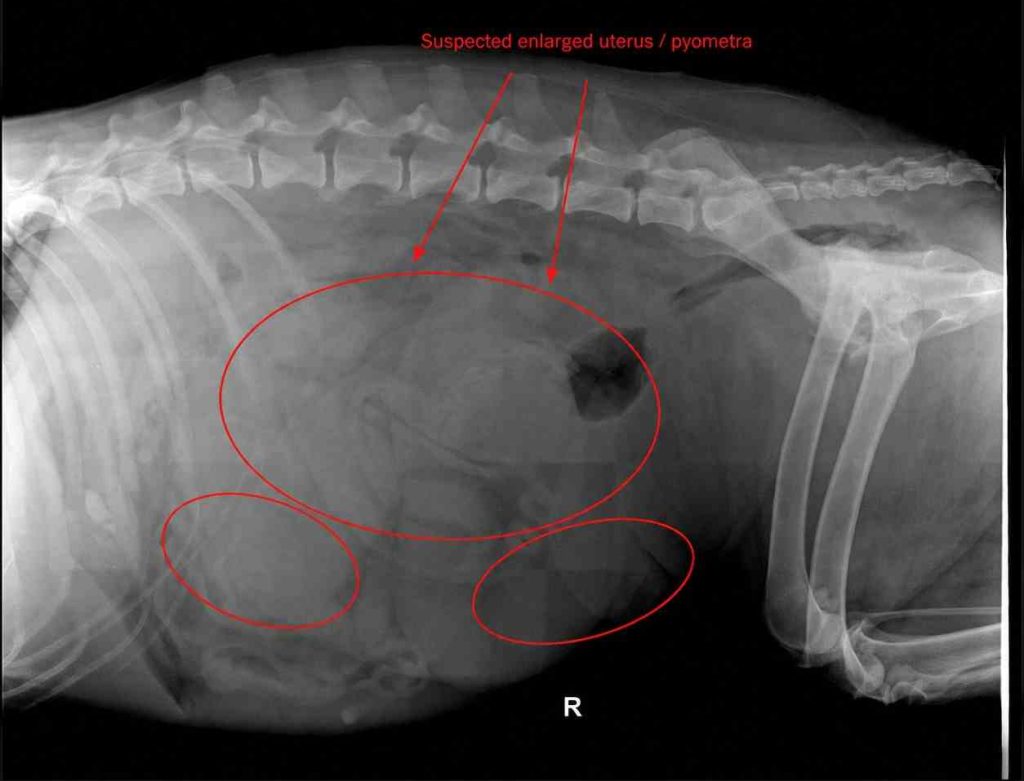
Before surgery, blood tests and radiographic (X-ray) examination were performed to evaluate the patient’s condition and surgical risk.
Pre-operative abdominal X-ray (VD view): The radiograph showed a suspected enlarged uterus, prompting further evaluation for possible pyometra
After evaluation, the veterinary team proceeded with same-day surgery to prevent further deterioration.
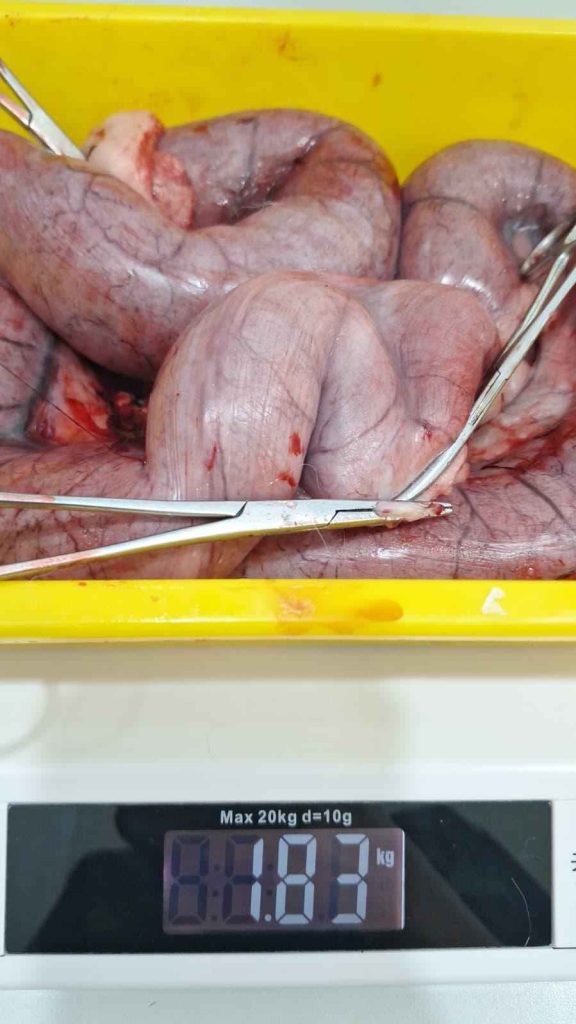
During surgery, the team discovered a severely enlarged uterus containing approximately 1.83 kg of infected material.
Approximately 1.83 kg of infected material was removed from the uterus during surgery to treat pyometra
The infection was advanced, and a strong foul odor was present when the uterus was removed.
This case clearly shows how serious pyometra can become internally, even if the dog may not initially look critically ill from the outside.
The patient was closely monitored after surgery and received post-operative care to support recovery from infection and surgery
After surgery, the patient was closely monitored during recovery. Pain control, antibiotics, and supportive care were provided as needed.
Why Same-Day Surgery Was Necessary
Pyometra is not just a structural problem, it is an active, worsening infection.
Delaying treatment allows bacteria and toxins to continue affecting the body, increasing the risk of:
Organ damage
Blood infection (sepsis)
Sudden collapse
In this case, early diagnosis, blood testing, and immediate surgery helped remove the source of infection before further complications developed.
Is Pyometra an Emergency?
Yes. Pyometra is always considered a serious veterinary emergency. Even if symptoms seem mild at first, the condition can worsen rapidly.
Seek veterinary attention immediately if your unspayed female dog shows:
Sudden tiredness or weakness
Loss of appetite
Vomiting
Increased drinking or urination
Abdominal swelling
Fever
Vaginal discharge (if present)
Collapse or severe lethargy
Can Pyometra Be Prevented?
The most effective way to prevent pyometra is sterilisation (spaying).
Spaying removes the uterus and ovaries, which completely eliminates the risk of pyometra.
For owners who are not planning to breed their dogs, sterilisation is strongly recommended. The timing of spaying can vary depending on breed, age, and health, so it should be discussed with a veterinarian.
One of the most important lessons from this case is that dogs with pyometra may not look severely ill at the beginning.
The infection can develop silently inside the uterus while outward signs remain subtle.
Do not wait for severe symptoms. Early veterinary assessment can make a major difference in outcome.
Frequently Asked Questions About Pyometra in Dogs
What is pyometra in dogs?
Pyometra is a serious infection of the uterus in unspayed female dogs, where pus builds up inside the womb and can become life-threatening.
What are early signs of pyometra?
Early signs may include tiredness, reduced appetite, increased thirst, vomiting, or subtle changes in behaviour.
Can a dog have pyometra without discharge?
Yes. In closed-cervix pyometra, no discharge is visible because the infection is trapped inside the uterus.
How is pyometra treated?
The most common treatment is surgical removal of the uterus and ovaries (ovariohysterectomy), along with supportive care such as fluids and antibiotics.
Need Veterinary Care for Suspected Pyometra?
Pyometra can become serious very quickly, especially in older unspayed female dogs. If you notice any unusual changes in your dog’s appetite, energy, drinking, urination, or behaviour, do not wait.
Contact us now at +65 8102 6966 or visit us at 265 Bukit Batok East Ave 4, #01-403, Singapore 650265 for immediate veterinary assessment if you suspect pyometra in your dog
Early action makes all the difference in treating pyometra successfully and giving your dog the best chance of recovery.
Share :
Deepavali Closure Notice
We’ll Be Closed from 8–10 November 2026
Dear pet owners, My Family Vet and Clinic will be closed from Sunday, 8 November, to Tuesday, 10 November 2026, inclusive, for Deepavali.
We will resume our normal operating hours on Wednesday, 11 November 2026.
Thank you for your understanding, and we wish you and your loved ones a happy and joyful Deepavali!